
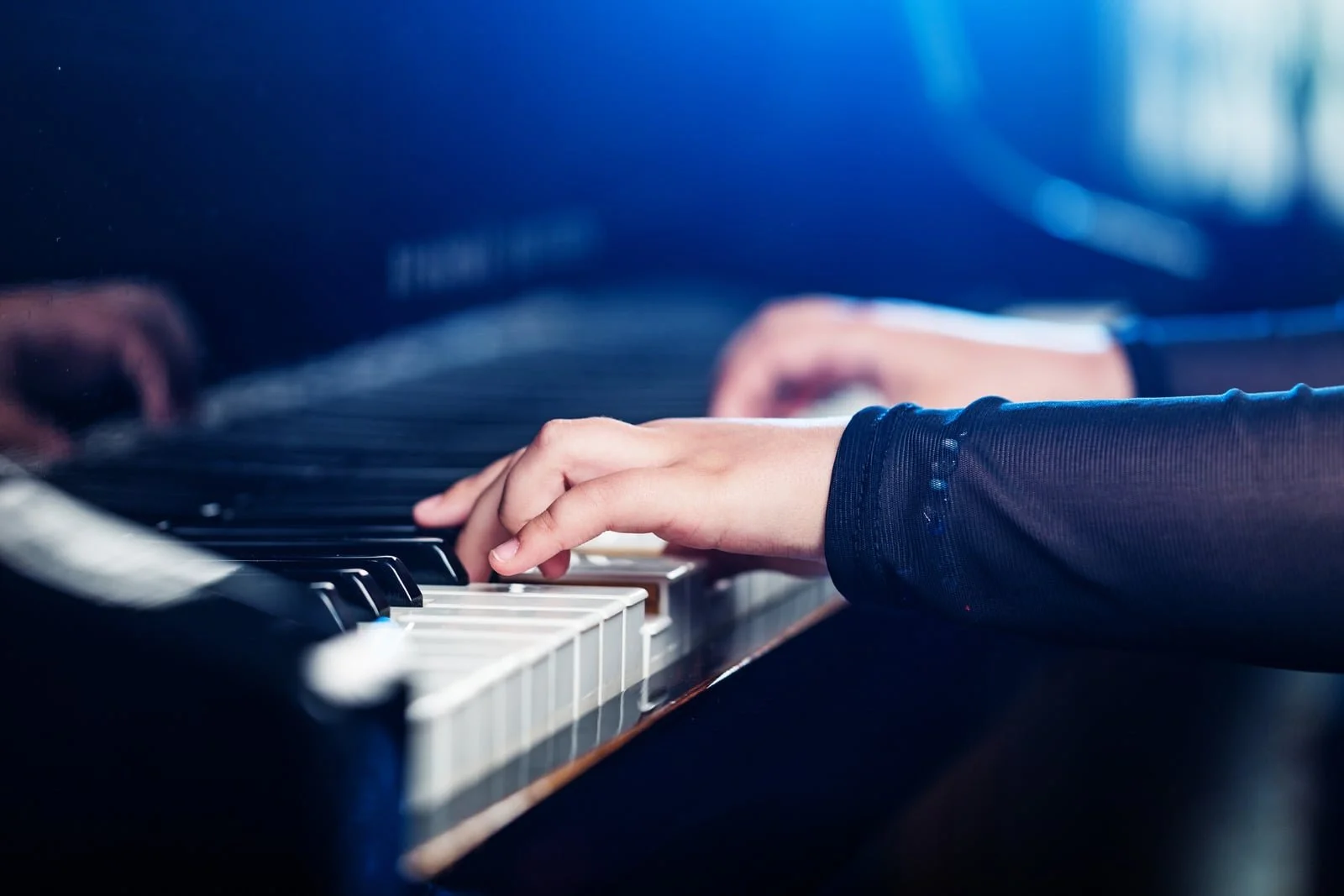
Intermediate & Advanced Piano Lessons
As your playing develops, piano lessons can become about much more than simply learning harder pieces.
Intermediate and advanced students can begin to explore music more deeply: developing greater technical and expressive freedom, understanding the music they play, improvising and composing, playing by ear, exploring harmony, and becoming increasingly independent musicians.
Lessons are personalized around the musician you already are and the musician you’d like to become.
Repertoire & Performance
There is always more to discover in a great piece of music.
For intermediate and advanced pianists, lessons can include detailed work on technique, interpretation, style, sound, phrasing, practice strategies, and performance. We can work on developing a substantial repertoire while finding increasingly efficient and thoughtful ways to learn it.
But I don’t want repertoire to exist in isolation from the rest of your musicianship.
Understanding harmony and musical structure can change the way you hear, memorize, interpret, and perform a piece. Improvisation can help you explore its musical language from the inside. Ear training can deepen your relationship with its sound.
The goal is not simply to play more difficult music, but to become a more thoughtful, capable, and expressive musician.

Repertoire & Performance
There is always more to discover in a great piece of music.
For intermediate and advanced pianists, lessons can include detailed work on technique, interpretation, style, sound, phrasing, practice strategies, and performance. We can work on developing a substantial repertoire while finding increasingly efficient and thoughtful ways to learn it.
But I don’t want repertoire to exist in isolation from the rest of your musicianship.
Understanding harmony and musical structure can change the way you hear, memorize, interpret, and perform a piece. Improvisation can help you explore its musical language from the inside. Ear training can deepen your relationship with its sound.
The goal is not simply to play more difficult music, but to become a more thoughtful, capable, and expressive musician.
Musicianship
As pianists become more advanced, it’s possible for their ability to reproduce written music to develop much faster than their ability to make music independently.
You might be able to play a Beethoven sonata but feel completely lost if someone asks you to play something without the score.
Or perhaps you can identify chords on a theory exam but don’t immediately recognize those same harmonies with your ears and hands.
Lessons can work on connecting these different parts of musicianship through:
Playing by ear
Harmony and voice leading
Audiation and ear training
Reading and sight-reading
Transposition
Figured bass and chord symbols
Accompaniment
Analysis
Memorization
Improvisation
Rather than treating these as separate “theory” subjects, we can explore them at the keyboard and connect them directly to the music you play.
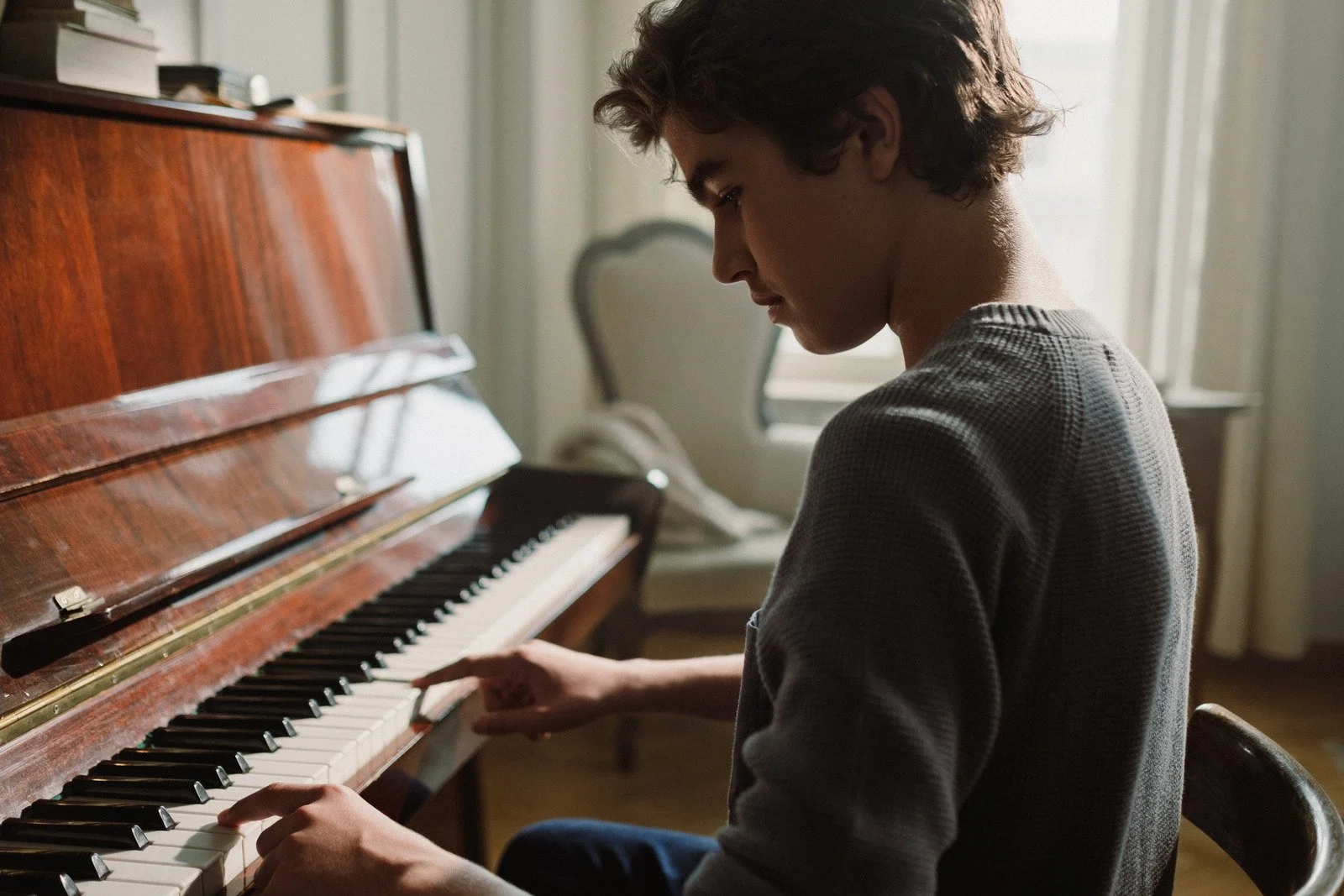
Improvisation, Composition & Partimento
For students interested in going further, improvisation and composition can become a significant part of lessons.
One approach I particularly enjoy teaching is partimento, a historical tradition in which musicians learned harmony, counterpoint, improvisation, and composition by working from bass lines and musical patterns at the keyboard.
Rather than beginning with abstract chord labels, partimento asks you to hear and play the relationships between bass, melody, harmony, and voice leading. You gradually develop a vocabulary of patterns that can be recognized in repertoire and used to improvise and create music of your own.
This can be especially rewarding for classical pianists. The composers whose music we play were part of musical cultures in which improvisation, composition, accompaniment, and performance were much less separated than they often are in classical training today.
Partimento isn’t the only way we can explore creativity, though. Depending on your interests, we might work with:
Free and structured improvisation
Improvising in classical styles
Jazz harmony and improvisation
Lead sheets and chord symbols
Composition
Songwriting
Arranging
Accompaniment
Reharmonization
Figured bass
Counterpoint
Exploring the musical language of pieces you’re already playing
The point isn’t that every advanced pianist needs to become a composer or improviser. It’s that these activities can give you new ways to hear, understand, and participate in music.
Your Next Steps
There isn’t a single path that comes after “intermediate.”
You might want to prepare ambitious repertoire, strengthen an area of your playing that has been neglected, become comfortable improvising for the first time, understand harmony at the keyboard, compose your own music, prepare for an exam or audition, or simply find a new direction after years of piano study.
We’ll start by looking at where you are now: what you play, how you’ve learned, what feels strong, what feels limiting, and what you’re curious about.
From there, we can build a path that challenges you while opening up new possibilities at the piano.
If you’re interested in lessons, it’s helpful to tell me:
A bit about your musical and piano background
What you’re currently playing or working on
What you’d like to explore or develop next
Whether you’re interested in in-person, online, or hybrid lessons
In-person lessons take place at my studio in Winnipeg’s West End.